Enterprise SaaS onboarding presents a different set of challenges than the startup version. The users are not all signing up independently with a credit card. They arrive through IT provisioning, legal approval processes, or enterprise sales agreements. Many have specific role-based needs that differ from those of their colleagues in the same company. And the product itself often has a level of complexity that makes a generic welcome tour genuinely unhelpful. Selecting the best user onboarding tools for enterprise requires thinking about scale, segmentation, and compliance, not just pretty tooltips.
This guide examines what enterprise onboarding actually demands, how the leading tools address those demands, and where the gaps tend to appear in products designed primarily with self-serve users in mind.’
Why Enterprise Onboarding Is Its Own Category
A startup can build a single, well-designed onboarding flow and apply it uniformly to all new users. That approach fails quickly at enterprise scale. A company with 500 new users coming from an enterprise deal needs onboarding that can distinguish between admins, power users, occasional users, and executives. Each segment has different time investment available, different feature awareness, and different definitions of success.’
Enterprise products also deal with organizational complexity that consumer or SMB tools rarely face. Multi-team rollouts, department-specific configurations, admin-managed settings that users cannot change themselves, and compliance requirements around data and privacy all affect how onboarding can be delivered. Tools that ignore this complexity create friction at exactly the point where first impressions matter most.’
What Separates Enterprise-Ready Onboarding Platforms
Role-Based Segmentation From Day One
The best user onboarding tools for enterprise products allow admins or product teams to create distinct onboarding tracks based on user role, team, or use case. An admin user needs to understand configuration options that a regular user never touches. A sales-focused user needs feature depth that an occasional viewer does not. Role-based onboarding delivers relevant guidance rather than overwhelming everyone with everything.’
SSO and Provisioning Compatibility
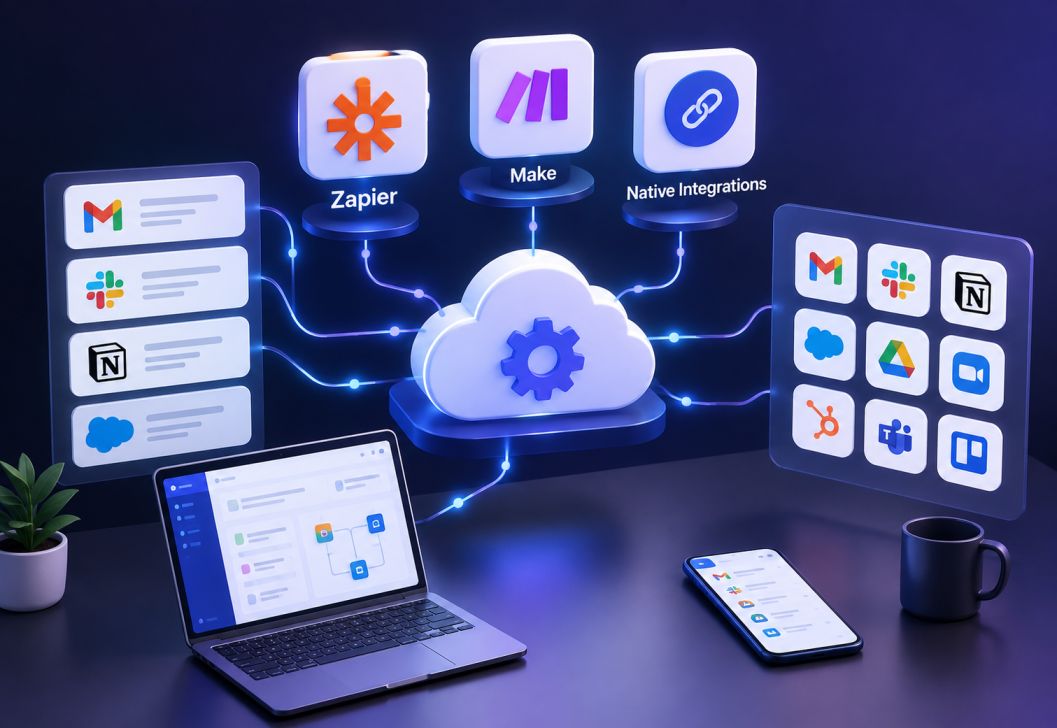
Enterprise IT teams provision users through SAML, SSO, or SCIM integrations. Onboarding tools that cannot accommodate these provisioning paths create friction at the account setup stage — sometimes before users have even opened the product for the first time. Enterprise-ready onboarding platforms integrate cleanly with identity providers and allow onboarding triggers to fire correctly for provisioned users, not just self-signup users.’
In-App Guidance Without Engineering Dependency
Enterprise product teams cannot afford to route every onboarding update through a development sprint. The best platforms offer no-code or low-code tools that let product, customer success, or learning teams build, update, and deploy onboarding flows without waiting on engineering. This is especially valuable in enterprise contexts where onboarding often needs to be updated to reflect new features, changing product requirements, or feedback from customer success teams.’
Analytics That Track Team-Level Progress
Enterprise deals are often evaluated by the account, not by the individual. Onboarding tools that only report on individual user completion rates miss the organizational picture. Enterprise-ready platforms offer account-level and cohort-level analytics — showing which teams have activated, which departments are underusing key features, and where multi-user rollouts are stalling.’
The Leading Platforms for Enterprise Onboarding
Pendo
Pendo is one of the more mature enterprise onboarding platforms on the market. Its in-app guidance features — tooltips, walkthroughs, resource centers — are well-developed, and its analytics layer gives product and customer success teams genuine visibility into feature adoption and user engagement. Pendo supports segmentation by user attributes, which enables the role-based onboarding that enterprise products require. Its pricing reflects its enterprise positioning, and teams should expect meaningful implementation investment to get full value from the platform.’
WalkMe
WalkMe occupies the upper end of the enterprise onboarding market. It was built for large-scale, complex software adoption — not just in-app tours, but full digital adoption platform capabilities including workflow automation and compliance tracking. For organizations that need to manage onboarding across multiple enterprise applications simultaneously, WalkMe offers depth that lighter tools cannot match. The implementation overhead is substantial, and smaller product teams often find WalkMe more infrastructure than they need.’
Appcues
Appcues positions itself at a more accessible point on the enterprise onboarding spectrum. Its no-code flow builder is genuinely usable for non-technical teams, which gives product and customer success teams the independence that enterprise onboarding requires. Segmentation, targeting, and analytics are solid without requiring significant configuration. Appcues works well for enterprise teams that need robust onboarding capabilities without the implementation burden of Pendo or WalkMe.’
Intercom Product Tours
For teams already using Intercom for customer communication, its product tours feature allows onboarding flows to connect directly with the broader customer lifecycle. The advantage is consolidation: onboarding, in-app messaging, and support all live in one platform. For enterprise teams managing high-touch customer success processes alongside self-serve onboarding, this integration reduces handoff friction. The limitation is that Intercom product tours are not as deep as dedicated onboarding platforms for complex segmentation use cases.’
Where Enterprise Onboarding Commonly Fails
Most enterprise onboarding failures share a recognizable pattern. The product team builds a comprehensive onboarding flow based on what users should need, deploys it with minimal testing on real enterprise cohorts, and then wonders why adoption metrics do not improve. The problem is usually one of three things: the flow does not account for role differences, analytics are not granular enough to identify where users drop off, or the onboarding experience is not updated frequently enough to reflect product evolution.’
Enterprise customers typically have longer contracts and higher expectations. Poor onboarding in an enterprise context is not just a conversion problem, it is a renewal risk. The investment in getting onboarding right scales with the size of the deals it protects.’
Onboarding for Products With Multiple User Types
A common challenge in enterprise SaaS is the multi-persona onboarding problem. A project management tool deployed to a 200-person company has at least three distinct user types: administrators configuring the workspace, team leads managing projects, and contributors executing tasks. Each persona needs to understand different things at different levels of depth.’
The best enterprise onboarding platforms handle this by allowing onboarding flows to branch based on user attributes or self-reported roles during signup. This requires both the right tooling and the right content strategy, two distinct investments that enterprise product teams often tackle separately but work better together.’
For comparison, the approach used by startup-scale onboarding tools is covered in our earlier piece: best user onboarding tools for startups. The contrast between those use cases and enterprise requirements illustrates why the tool selection differs significantly between stages.’
Conclusion
The best user onboarding tools for enterprise SaaS go well beyond welcome screens and feature checklists. They segment by role, integrate with provisioning systems, give product teams control without engineering overhead, and report at the account and cohort level. Pendo, WalkMe, and Appcues each address these requirements in different ways and at different price points. The right choice depends on your implementation capacity, your customer success model, and how much your product team needs to own the onboarding experience without relying on engineering for every update.’