Best CRM for Nonprofits: Donor, Volunteer, and Grant Management in One Place
April 9, 2026
0
Most nonprofit teams are juggling more than people realize. On any given week, a development coordinator might be tracking a major donor cultivation conversation, scheduling volunteer orientations, preparing
Most nonprofit teams are juggling more than people realize. On any given week, a development coordinator might be tracking a major donor cultivation conversation, scheduling volunteer orientations, preparing a grant progress report, and sending a thank-you letter to a first-time donor. When that work lives across a spreadsheet, a Gmail inbox, and a separate volunteer management tool, things fall through the cracks constantly.
A nonprofit CRM brings these workflows together. Instead of hunting for the last touchpoint with a donor or manually compiling volunteer hours before a board meeting, your team works from a single source of truth. But not every CRM is built to handle the unique needs of mission-driven organizations. Choosing the right one requires looking beyond feature lists.
This guide focuses on platforms that genuinely serve nonprofit operations in 2026, not just general-purpose CRMs with a nonprofit label attached.
What Nonprofits Actually Need From a CRM
A nonprofit’s relationship ecosystem is fundamentally different from a for-profit company’s. Instead of managing leads and customers, you are managing:
Donors with varying giving histories, motivations, and stewardship needs
Volunteers with availability schedules, skill sets, and hour tracking requirements
Grant funders with application deadlines, reporting requirements, and multi-year commitments
Program participants or beneficiaries who are distinct from your donor base
Because of this complexity, a CRM designed around a sales pipeline will never quite fit. Nonprofit CRM software needs to account for LYBUNT (Last Year But Not This) tracking, soft credit attribution, recurring gift management, and impact reporting. These are not features you can bolt on later.
Top CRM Platforms for Nonprofits in 2026
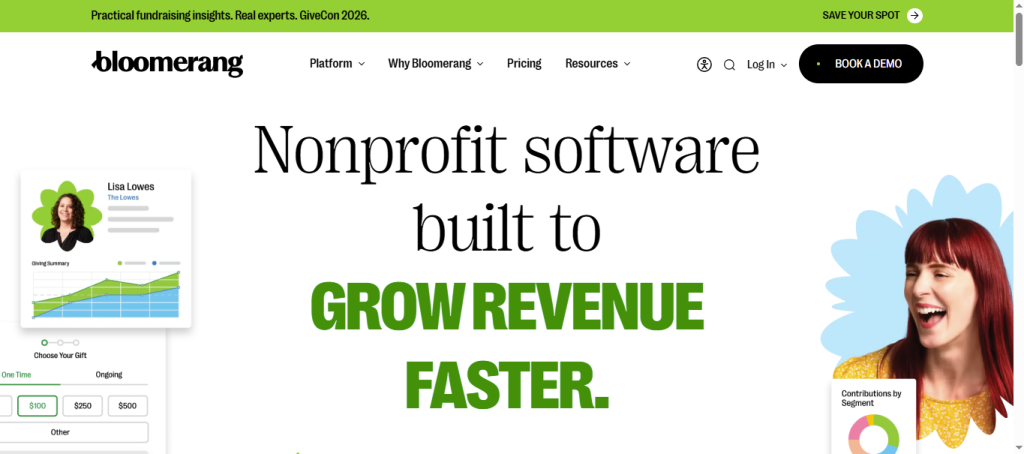
Bloomerang
Bloomerang is purpose-built for donor retention, and that focus shows throughout the platform. Its donor engagement score gives development staff a quick visual signal of how connected each donor is to your organization. This helps you prioritize outreach before relationships go cold, rather than chasing lapsed donors after the fact.
Bloomerang also includes built-in email tools, online giving forms, and a reporting dashboard designed around fundraising metrics, not sales KPIs. For small to mid-sized nonprofits that want strong donor management without steep implementation complexity, it is one of the clearest choices on the market.
Best for: Small and mid-sized nonprofits focused on donor retention and relationship depth.
Pricing: Starts at $125 per month, scaling based on contact volume.
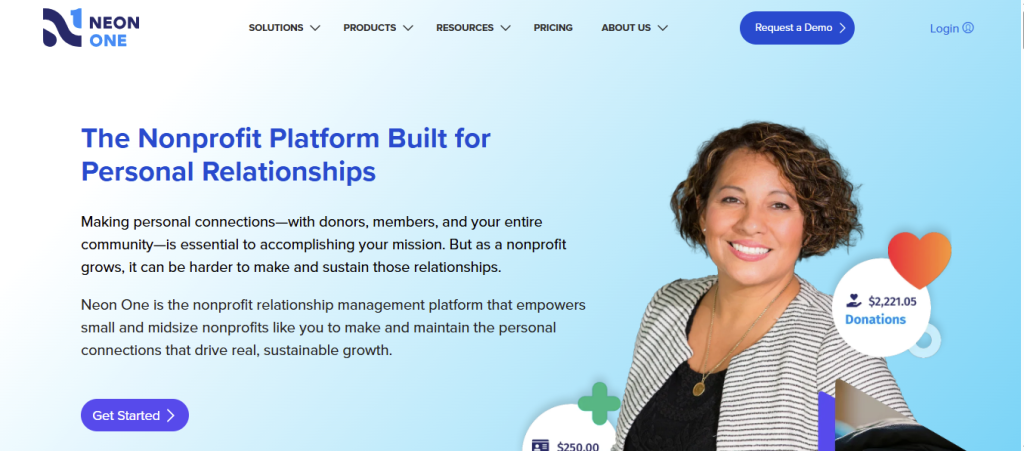
Neon CRM
Neon CRM takes a broader approach than Bloomerang. Beyond donor management, it handles membership management, event registration, volunteer coordination, and grant tracking within a single platform. For nonprofits running multiple programs or managing a membership base alongside a donor base, that breadth is genuinely valuable.
Neon CRM prices on a revenue-based tier model rather than per-user or per-contact pricing, which makes costs more predictable for growing organizations. The platform also integrates with QuickBooks, Mailchimp, and Stripe, covering most of the tech stack a typical nonprofit already uses.
Best for: Growing nonprofits with diverse constituent types, including members, donors, and volunteers.
Pricing: Revenue-based tiers; entry-level plans are accessible for smaller organizations.
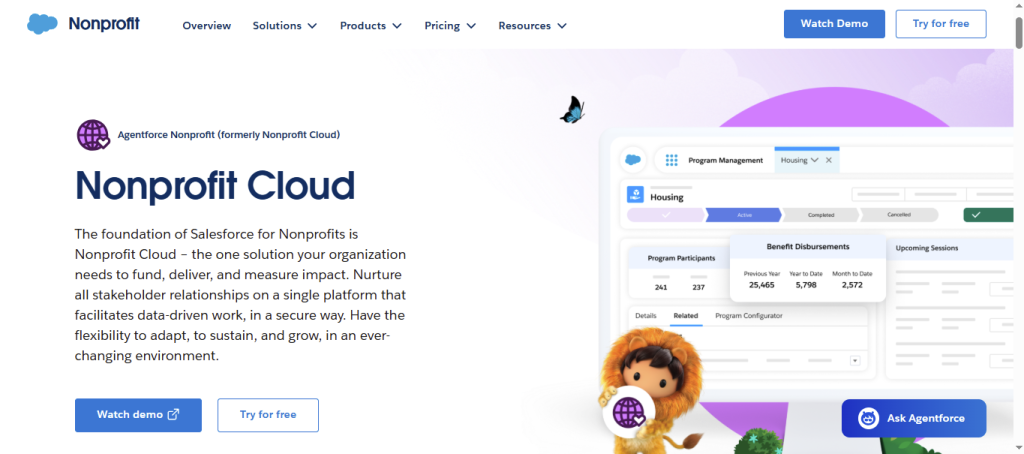
Salesforce Nonprofit Cloud
Salesforce’s Nonprofit Cloud is one of the most powerful options available, particularly for organizations that need enterprise-scale reporting and customization. Through its Power of Us program, qualifying nonprofits receive 10 free licenses, which significantly lowers the barrier to entry.
The challenge with Salesforce is that its power comes with real complexity. Without staff who have Salesforce experience, or a consultant to configure the system properly, even a free implementation can become expensive in practice. For larger nonprofits with dedicated data staff or an IT team, though, Salesforce Nonprofit Cloud offers capabilities no other platform can match.
Best for: Large nonprofits or those with in-house Salesforce expertise and complex reporting needs.
Pricing: 10 free licenses for qualifying nonprofits through the Power of Us program; paid plans vary.
Little Green Light
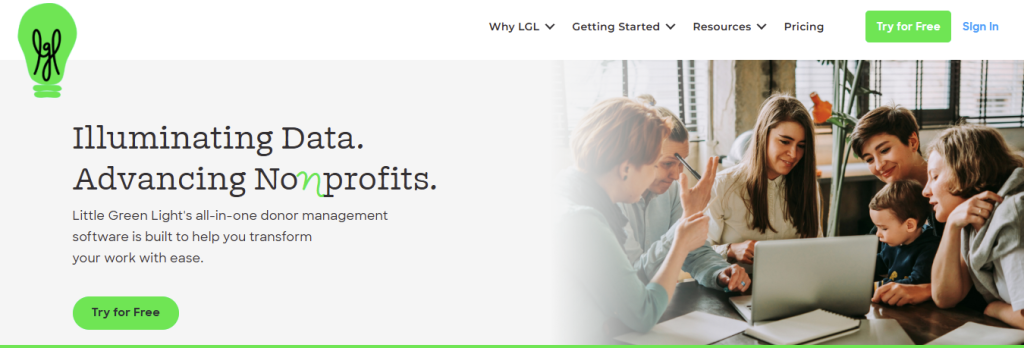
Little Green Light is one of the most genuinely affordable nonprofit CRM tools on the market, and it does not cut corners on core functionality. It covers donor management, gift tracking, event management, and volunteer tracking within a clean, easy-to-navigate interface.
For newer nonprofits or organizations with tight budgets and basic CRM needs, Little Green Light offers remarkable value. It will not scale into complex grant management or multi-program case tracking, but for the majority of small organizations, it covers everything that actually matters day-to-day.
Best for: Small nonprofits and new organizations on a limited budget.
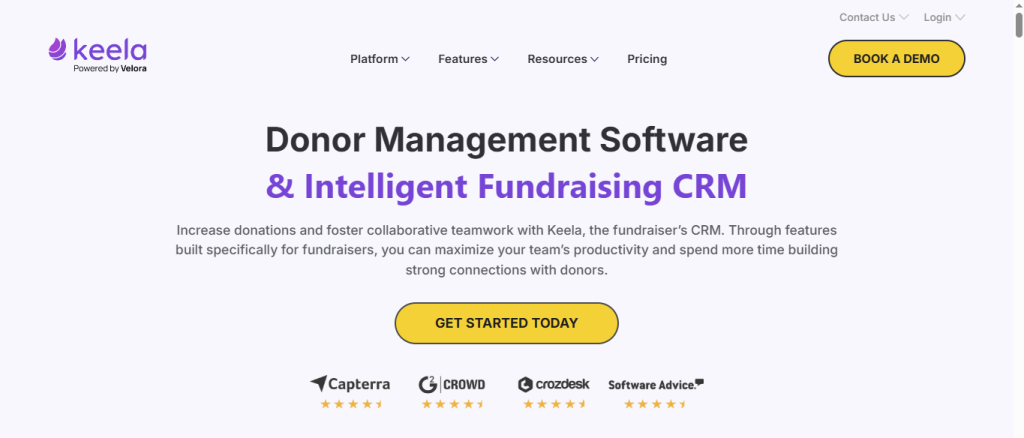
Keela is a strong option for nonprofits that want a balance between usability and analytical depth. It includes AI-powered donor insights, suggesting the right time to ask for a gift and predicting which donors are most likely to upgrade their giving level. For fundraising teams that want data to guide their outreach strategy rather than relying on gut instinct alone, this is genuinely useful in 2026.
Keela also includes built-in grant management, which is rarer than you might expect. You can track grant applications, report deadlines, funder contacts, and outcome data inside the same platform where you manage donors. That consolidation saves meaningful time across a typical development calendar.
Best for: Mid-sized nonprofits wanting AI-assisted fundraising and integrated grant tracking.
Pricing: Starting at $125 per month, based on contact count.
Comparing Nonprofit CRM Platforms
Platform
Donor Management
Volunteer Tracking
Grant Management
Starting Price
Bloomerang
Excellent
Basic
Limited
$125/mo
Neon CRM
Strong
Yes
Partial
Revenue-based
Salesforce Nonprofit
Excellent
Via add-ons
Yes
Free (10 licenses)
Little Green Light
Good
Basic
Limited
$45/mo
Keela
Strong + AI
Limited
Yes
$125/mo
How to Choose the Right Nonprofit CRM
Before requesting demos, map out your three most time-consuming workflows. Then ask each vendor directly: how does your platform handle this specific process? The answers will tell you more than any feature list.
Think about who will use the CRM daily. A platform that requires data-savvy staff to get value from it is a poor fit for an all-volunteer team. Conversely, a simple tool that cannot produce the board reports you need every quarter creates its own problems.
If grant management is a major part of your fundraising strategy, prioritize platforms that handle it natively. Trying to manage grant deadlines and reporting inside a CRM built only for donor tracking adds unnecessary complexity. Similarly, if volunteers are core to your program delivery, confirm that volunteer hour tracking and scheduling are first-class features, not an afterthought.
Finally, consider your growth trajectory. A CRM that fits your needs today but cannot scale as your donor base grows will cost you a painful migration in two years.
Practical Questions to Ask Before You Commit
Can the system send automated gift acknowledgments within 24 hours of a donation?
Does it track soft credits and matching gifts out of the box?
How does it handle recurring donor records when someone changes their giving frequency?
Can it generate the reports your board expects at quarterly meetings?
What does the data migration process look like, and is there support included?
Getting clear answers to these questions during a demo will save you from discovering them as problems after go-live.
The right nonprofit CRM helps your team spend less time managing data and more time building the relationships that sustain your mission. That trade-off alone makes the investment worthwhile.