Linear vs Jira: The Developer Project Management Showdown for 2026
May 16, 2026
0
Two tools. Two philosophies. One genuinely consequential decision for engineering teams. Linear launched in 2019 with a single thesis. Project management tooling had become an obstacle to the
Two tools. Two philosophies. One genuinely consequential decision for engineering teams.
Linear launched in 2019 with a single thesis. Project management tooling had become an obstacle to the work it was supposed to support. Jira, Atlassian’s 24-year-old platform, had built the most comprehensive developer workflow system in the industry, but complexity compounded over decades tends to calcify into exactly the kind of friction Linear was built to eliminate.
In 2026, both platforms have evolved significantly. Atlassian rolled out Atlassian Intelligence across its product suite. Linear shipped AI-native features that feel integrated rather than bolted on. The gap has narrowed in some areas and widened in others. Here’s what engineering leaders actually need to know.
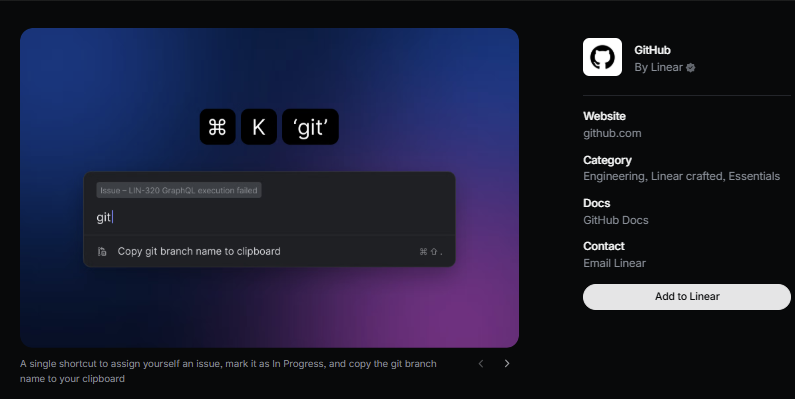
The team behind Linear, which includes engineers from Airbnb, Uber, and Coinbase, built the tool from a specific frustration: every context switch to update a ticket was interrupting the work that actually mattered. The result is a product that loads in milliseconds, accepts keyboard input for nearly every action (Cmd+K opens the command palette), and gets out of the way.
This is not surface-level UX polish. The speed is architectural. Linear’s sync engine is built to feel like a local application, and responses are immediate because the data model was designed from day one around low-latency interaction. That design choice has real productivity implications that compound across every sprint.
Linear’s Cycles are a particularly well-thought-out take on sprint management. Issues can roll over without ceremony. There’s no mandatory pre-sprint ritual. Teams can adapt the system to how they actually work rather than how agile methodology textbooks say they should. For high-velocity product teams that iterate constantly, Cycles feel natural in a way that traditional Scrum boards often don’t.
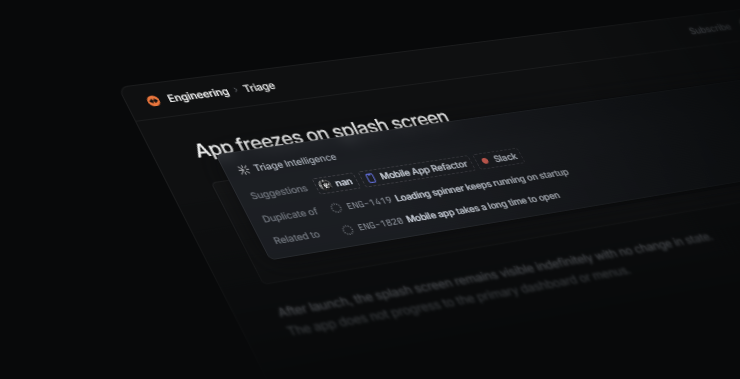
The AI capabilities Linear ships in 2026 are genuinely integrated. Backlog prioritization surfaces the issues most likely to be blocking progress. Auto-generated sprint reports are contextually accurate. Ticket triage assigns incoming issues to the right team members based on historical patterns. Most notably, Linear’s agent for Slack can create issues from conversation threads without anyone leaving the channel, a small feature with enormous practical value for teams where work surfaces in messaging first.
Jira in 2026: Atlassian Intelligence & Enterprise Depth
Criticizing Jira for being complex is a bit like criticizing a Swiss Army knife for having too many tools. The complexity is the product. Jira’s configurability — custom issue types, conditional workflow transitions, advanced roadmaps with cross-project dependencies — exists because many organizations genuinely need that level of control.
Atlassian Intelligence, available on Premium plans ($18.30/user/month), landed as the platform’s most significant update in years. Natural language JQL queries mean that less technical stakeholders can now search for issues without learning query syntax. AI-generated descriptions help teams write better tickets faster. Automated categorization surfaces patterns that manual triage would miss.
The Atlassian ecosystem advantage remains substantial. Jira integrates natively with Confluence (documentation), Bitbucket (version control), and Jira Service Management (ITSM). For organizations already running on the Atlassian stack, these integrations aren’t just convenient — they’re often deeply embedded in regulatory workflows, audit trails, and enterprise security configurations that would cost significantly more to replicate elsewhere.
Over 300,000 organizations use Jira worldwide, including the majority of Fortune 500 engineering departments. That scale has produced something Linear can’t yet match: proven deployment patterns for extremely large, complex environments. When your engineering organization spans 2,000 people across multiple regulatory jurisdictions with different compliance requirements per team, Jira’s depth isn’t a bug — it’s the only real option.
Developer Workflow Efficiency: Daily UX Reality
The honest answer from teams who’ve used both: Linear wins on daily experience for individual developers. Pages load instantly. Searching is fast. Creating an issue takes seconds. Developers actually update their tickets because doing so doesn’t interrupt their flow.
Jira Cloud has improved meaningfully since 2022. The performance complaints of two or three years ago are less universal now. But the performance gap with Linear remains noticeable for heavy daily users, particularly on large workspaces with many concurrent automations running. Senior engineers with long memories of painful Jira experiences may need deliberate reintroduction to the 2026 version to change their perception.
GitHub/GitLab Integrations
Linear’s GitHub integration is among the best in class. Creating a branch from a Linear issue automatically names it with the issue identifier. Merging a PR moves the linked issue to Done. The bidirectional sync is genuine, not a polling delay but a real-time reflection of what’s happening in the code repository. For teams where code review and issue tracking should feel like one continuous workflow, this is a meaningful differentiator.
Jira’s GitHub integration is functional and improving, but native Bitbucket integration remains more polished. Teams already on GitHub or GitLab will find Linear’s integrations more seamless day-to-day.
AI Features: Atlassian Intelligence vs Linear AI
Linear’s AI feels native. It’s woven into the actual issue management workflow: triage suggestions, priority surfacing, sprint summaries, and Slack-based issue creation all reduce cognitive load in context. Integrations with Codex, GitHub Copilot, Cursor, and Claude Code mean Linear is increasingly positioned as the organizational layer that connects how engineers think about work to how they execute it.
Atlassian Intelligence is broader but arguably shallower per feature. NLP query generation, smart summaries, and auto-categorization are all genuinely useful. But the implementation reflects a tool retrofitting AI onto a legacy architecture rather than one that was designed with AI-native workflows in mind from the start.
Pricing & Total Cost of Ownership
Linear Plus at $8/user/month is straightforward. Jira Premium at $18.30/user/month is more than double that. For a 30-person engineering team, the annual difference is approximately $3,700. That’s real money, though it doesn’t account for the potential Atlassian ecosystem savings if Confluence and Jira Service Management are already in use.
For teams evaluating total cost of ownership, Jira’s cross-product value only materializes if you actually use the broader Atlassian stack. If you’re just evaluating issue tracking, Linear’s price advantage is hard to ignore.
Migration: Moving from Jira to Linear
Linear provides a native Jira importer that brings over issues, labels, and users. Most teams complete initial migration in a day. The practical friction isn’t technical — it’s cultural. Teams with years of custom Jira workflows, field configurations, and embedded stakeholder reporting pipelines face the real cost of migration in human time, not import tooling.
Honest guidance: run a two-week parallel pilot with one engineering pod before committing. Teams that pilot Linear almost always keep it. But if your organization has deeply embedded Jira workflows with non-engineering stakeholders depending on them, the migration cost is a real organizational investment, not just a technical exercise.
Where Jira Still Wins
Even advocates for Linear acknowledge the cases where Jira is the correct answer: organizations with over 1,000 engineers with complex enterprise governance requirements, regulated industries (finance, healthcare, defense) where Atlassian’s compliance certifications are a prerequisite, teams running IT Service Management alongside software development, and organizations with meaningful investment in the broader Atlassian platform. For mixed teams that also need to manage marketing, ops, or HR workflows, see our breakdown of ClickUp vs Asana for cross-functional teams.
The “Jira is bad” community narrative has some merit but overstates the case. For the specific environment it was built for, Jira remains the most comprehensive and proven option available.
Final Verdict
For the majority of software teams in 2026, particularly startups and growing engineering organizations with fewer than 500 people, Linear is the stronger choice. It’s faster, developers genuinely enjoy using it, and the AI integrations fit how engineering work actually happens.
Jira remains the correct choice for large enterprises with complex cross-functional workflows, existing Atlassian ecosystem investment, or compliance requirements that demand its governance depth.
The most useful framing: don’t switch off Jira just because it’s fashionable to dislike it. Evaluate honestly whether your engineers’ daily friction with the tool is costing real productivity. If it is, the migration pain is worth it. If Jira is working and your team isn’t complaining, switching introduces risk without guaranteed reward.
FAQ Section
Q: Can Linear handle large teams of 500+ engineers?
Yes. Linear has enterprise customers in the 500+ range. However, Jira has more proven deployment patterns for 1,000+ person organizations with complex portfolio management needs.
Q: Is migrating from Jira to Linear technically difficult?
The import tooling is solid. The harder challenge is migrating embedded workflows and stakeholder reporting habits. Run a team pilot before committing.
Q: Does Jira still have performance problems in 2026?
Jira Cloud has improved significantly since 2022, but the performance gap with Linear remains noticeable for heavy daily users on large workspaces.
Q: Is Linear suitable for non-engineering teams?
Linear is explicitly built for engineering, product, and design workflows. Marketing, HR, and operations teams will find it limiting; a secondary PM tool for those functions is usually required.
Q: What’s the biggest underrated advantage of Linear?
Developer adoption. Engineers actually update Linear tickets because the experience doesn’t interrupt their flow. Any PM tool’s value collapses without consistent adoption.